
Nature does its thing far better than any human. Bringing artificial bee hives of any kind and for any reason into Nature Reserves would fundamentally affect the very sensitive pollination networks and natural balance that exists in nature. Learning from nature’s genius is our inspiration.
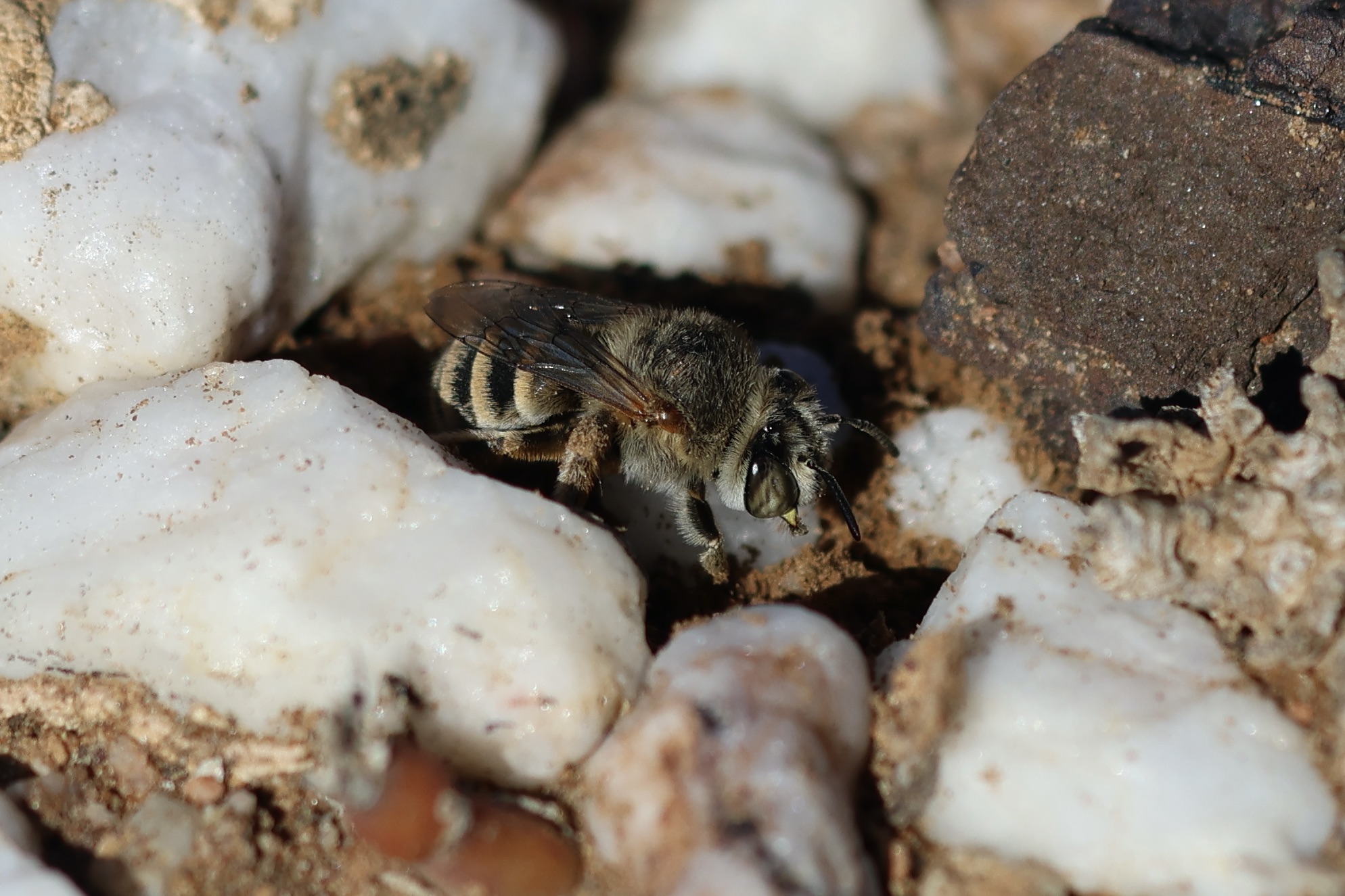
Ujubee is an independent South African conservation organisation dedicated to the protection of wild-living bees and their relationships within living systems through Relational Research, long-term ethical, non-invasive observation, and the development of the world’s first Wild Bee Reserve.
Wild-living bees are autonomous beings whose lives are deeply interwoven with the living world. Through long-term relationship, observation, research, and conservation, Ujubee seeks to better understand and protect wild-living bees in the places they have always lived.
(‘Uju’ is the Zulu word for ‘honey’):
THE UJUBEE WILD BEE GUARDIANSHIP CHARTER
Honouring right relation with wild bees
The Understanding
Wild bees do not belong to the land we claim, nor to the systems we build.
They belong to the living fabric of Earth itself.
Long before human ownership, agriculture, conservation frameworks, or scientific institutions existed, wild bees were already here — maintaining relationships between flowering plants, soils, water cycles, and entire ecological communities.
Their lives are not services.
Their presence is not conditional.
Their value does not arise from usefulness to humans.
Wild bees exist as autonomous participants in the living world.
Guardianship begins with recognising this truth.
Recognition of Wild Bee Autonomy
Wild bees are free-living beings who:
• Choose their own nesting places
• Regulate their own life cycles
• Maintain ancient ecological relationships beyond human perception
• Exist within complex webs of interdependence with plants, other living beings, and climate systems
They are not resources.
They are not research material.
They are not units of ecosystem service.
They are sovereign participants in Earth’s living systems.
The Meaning of Guardianship
Guardianship does not mean management, control, or intervention.
It means standing in right relationship.
To act as a guardian is to:
• Protect the conditions that allow wild bees to live undisturbed
• Refrain from actions that cause harm, disruption, or extraction
• Recognise that humans are participants within the landscape — not its owners in any ecological sense
Guardianship is therefore not an act of authority.
It is an act of humility.
Shared Ethical Commitments
Where this charter is embraced, there is a shared understanding that:
• Wild bee nesting sites will not be intentionally destroyed, disturbed, or altered
• Wild bees will not be collected, killed, relocated, or subjected to invasive scientific study
• Land practices will seek to avoid harm to known nesting populations
• Human activity will respect the right of wild bees to exist free from exploitation
Ujubee’s role within this relationship is not management, but ethical presence:
• Observing non-invasively
• Bearing witness to the lives of wild bees
• Offering ecological insight where it supports coexistence
• Upholding the principle that wild beings are not here for human use
A Living Relationship
This charter is not a legal contract.
It is a statement of shared ethical understanding between humans who recognise that:
Wild beings do not need to earn protection.
They already belong.
Guardianship is an ongoing relationship grounded in trust, respect, and the commitment to protect life for its own sake.
Closing Statement
To enter into guardianship is to accept a simple truth:
We do not save wild bees.
We choose to stop harming them.
And in doing so, we restore our place within the living world.
Bees and Biodiversity In South Africa
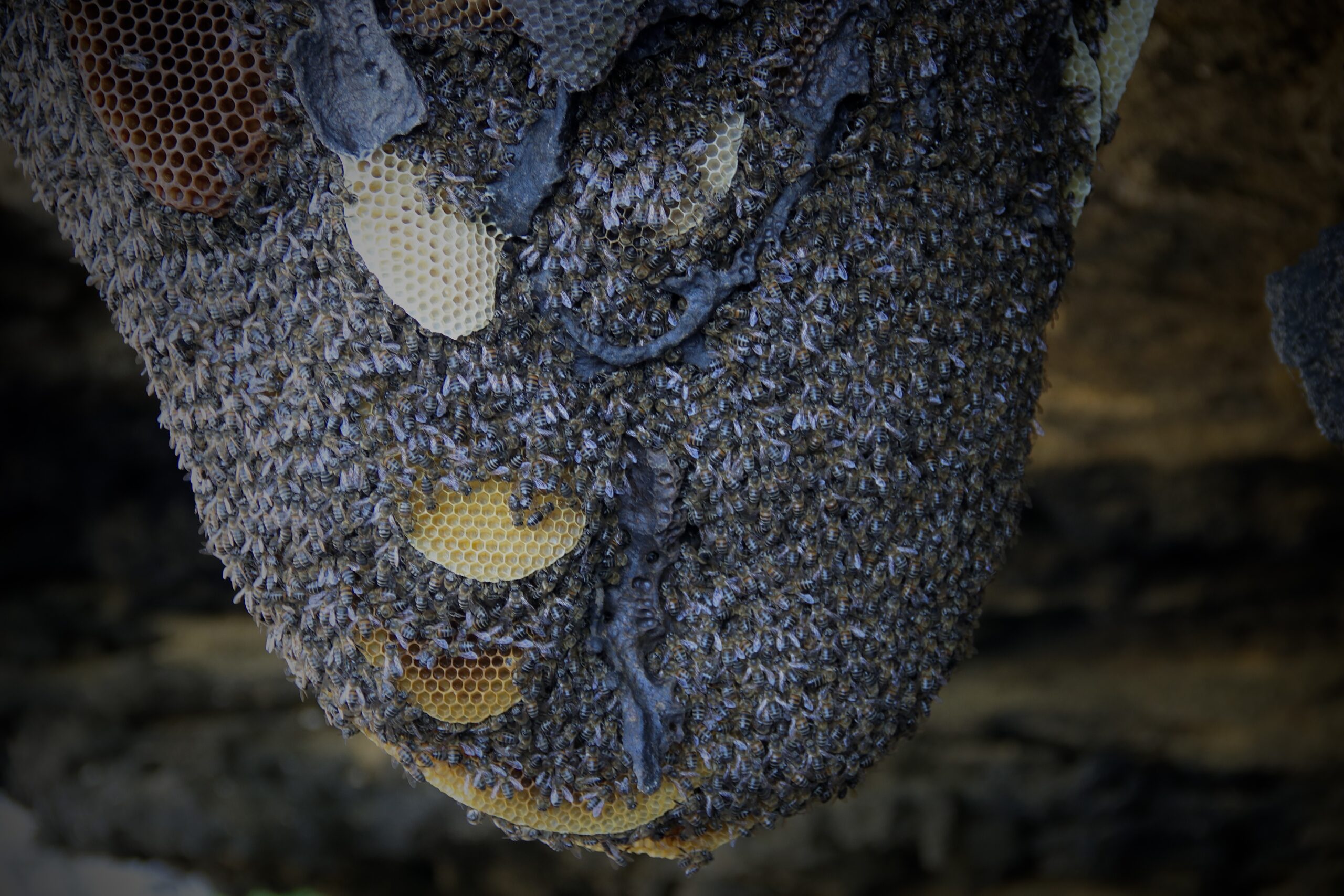
South Africa is in a very unique situation in that roughly 90% of our honeybees still live in the wild, unlike Europe where most of the bees are hived (Germany has 99.9% of all their bees living in hives and all the bees are managed and medicated. This means that Germany has lost their pure strains of wild bees). Having most of our bees living in the wild means that SA has a healthy gene pool of wild bees. Our bees need to be protected in their wild habitats to ensure that this gene pool is not weakened in any way. Bees are a keystone species and are vital for biodiversity. In the Cape we have the smallest and most diverse floral kingdom in the world. (The fynbos region covers less than 6% of SA.) This floral kingdom is primarily pollinated by bees. Honeybees and other species of bees pollinate 85% of the fynbos. It is vital that we protect bees in pristine areas so that biodiversity can survive.
How do we go about doing this?
From a biodiversity conservation point of view
- First and foremost, the Cape honeybee is unique among all the honeybee (Apis mellifera) subspecies, and species (other Apis species) in the world, in that the workers are parthenogenetic (this means that they are able to “clone” themselves and therefore they are able to re-queen a colony if they lose their queen). Our nature reserves and national parks are areas where bees can live without being “contaminated” by hybridised farmed bees. The only place that pure Cape honeybees are guaranteed to exist is in the Cape Point Nature Reserve and in other remote areas. Therefore, this Reserve conserves unique South African biodiversity: (1) no other bees should be allowed to be introduced into this Park or any other conservation area, (2) any hives already introduced into conservation areas should be removed.
- Researching the bees in these pristine areas is crucial for our understanding of biodiversity and the role bees play in this unique floral kingdom (Ujubee has been working in this reserve and other areas for the past 5 years, researching the ecology of the Cape honeybee and other bee species).
- Migratory pollination, i.e., moving honeybees around the country for pollinating crops that flower at different times of the year, is practised extensively in South Africa and is the principal occupation of bee farmers. This bee-keeping practice has resulted in local strains of bees, i.e., those from different parts of the country, being interbred and consequently, to a large extent, our local strains (i.e., genetic diversity) are lost. Those in conservation areas are therefore invaluable for biodiversity (genetic diversity) conservation. As mentioned above, this is particularly important where pure strains of Cape honeybees exist, i.e., the Cape Point Nature Reserve. Improving policies around safeguarding conservation areas (bee breeding zones, genetic stock) is required.
- When honeybees are present in large numbers they drive other bees away from floral resources. Therefore, beekeeping may result in the demise of other bee species if the number of individuals is increased. This is because honeybees are not good pollinators of all plants – robbing some of nectar and not pollinating them. This can result in the extinction of some bee species and some monolectic plant species (plants with one or a few closely related pollinator species). Policies are needed here to ensure that we safeguard the semi-social and solitary bee populations and the plants that they pollinate.
- Migratory pollination has spread bee diseases around the country, and some of these are notifiable diseases according to international animal disease laws. A common practice in SA is that conservation areas are used by bee farmers to “rest” their bees after the pollination season. This can also mean that some farmers “rest” large numbers of colonies in hives right on the boundaries of conservation areas, thus introducing bees into national parks/conservation areas, threatening the health of the wild colonies and putting all other pollinators under pressure. When bee hives are kept in close proximity, as in an apiary, the risk of contamination is greater. Policies need to be developed to ensure that the wild bees remain healthy.
- As honeybees are the only managed pollinator in South Africa, exposing our protected wild populations to loss of genetic diversity and introduced bee diseases would threaten food security in South Africa (one-third of all the food we eat requires a pollinator, and these are our most nutritious foods) and biodiversity.
- Risking our biodiversity to poorly conceived policies is something we cannot continue to do.
For those wishing to see the BEE LINE exhibition, 196 Victoria will be open Monday – Friday from 9AM-4PM. The exhibition closes on 31 May 2017.


Wild Bee Clip, Cape Peninsula, South Africa…
The Need for Research
There are 6 floral kingdoms on earth. The Cape fynbos is the smallest, but the richest floral kingdom in the world. This floral kingdom is kept alive by its pollinators. Apis mellifera capensis (Cape honeybee) pollinates more than 85% of the fynbos flowers. Without these bees we would lose this floral kingdom. Bees keep it together. They ensure the bio-diversity of the world around us. We have to understand how these bees have adapted to this amazing floral kingdom and what we can do to keep them safe. Bees worldwide are dying at the moment and if A. m. capensis were to die we would lose this race of bee that has evolved over time to survive in this harsh bee environment. Researching them is of great value to ensuring the longevity of our natural world.


We spend many hours with wild bees watching everything they do. We hope to really learn their way of life by observing them as closely as possible in their natural world. Only when one knows what is normal, can one see the extraordinary. Our main aim is to see first hand how important these bees are to the Table Mountain National Park Cape of Good Hope Section, look for patterns and hopefully they will reveal some interesting secrets to us.
Our research project has been mostly self-funded for the past four years and as we move into our fifth year of research we would love support from all who are equally fascinated by bees and feel that wild bees have the right to live in wild spaces, in their natural habitats and without the interference from people wanting to “commodotise” them for some personal or commercial gain. We hope to establish further sanctuaries protecting wild bees (honeybees, solitary and sub-social bees) in their unique biomes throughout South Africa and thus safe-guarding their diversity and gene-pool for the future.
We are bee conservationists and we are passionate about our work. In addition to our blog, we have an ujubee facebook page, which is a diary of our work over the past years and beyond.


